
Setting it straight at 38
This is my flamingo year

Who am I when I stop being what everyone else needs?
It’s a question I’ve been asking myself a lot lately. Because somewhere between building a career, raising two kids, and trying to be everything to everyone, I realized I have no idea how to answer it.
A few weeks ago, I was reading A Color of His Own to my daughters. It’s about a chameleon who keeps changing colors to match his environment.
Yellow on the lemon, purple on the heather, green on the leaf.
It starts out playful. But eventually the chameleon gets tired. He doesn’t want to keep changing anymore. He wants a color of his own, something steady, something true.
Halfway through the book, I realized: that’s me.
I’ve been a chameleon for as long as I can remember.
I was seven when we moved to America from Ukraine. I didn’t speak English and had a name no one could pronounce. I wore the wrong Halloween costume, brought the wrong lunch, didn’t understand the rules of the playground.
I felt like an outsider. Different.
What I wanted more than anything was to be American, to belong.
So I studied everyone around me. How they talked, what they wore, how they moved through the world. I watched and adjusted, got rid of my accent, learned the unspoken rules, and got really good at blending in.
And it worked. I stopped feeling like such an outsider and made friends. Being whoever people wanted me to be became effortless.
The immigrant mindset I learned early on was simple: shape-shift to stay safe. Perform to belong.
That same skill helped me in my career. My adaptability made me promotable.
As a product leader at Pinterest, I could navigate complicated dynamics, manage across personalities, and communicate in a way that got buy-in from even the most difficult stakeholders.
The more senior I got, the more the job became about alignment. Reading the room, getting everyone on the same page.
And I was good at it. It’s what got me promoted to Director.
But at some point, I started getting feedback: “We want to see more of your product vision.”
That feedback forced me to revisit how I’d been operating. I realized I’d gotten so focused on supporting others’ ideas, I’d stopped standing for my own. I’d go into meetings with a strong opinion, and walk out agreeing with everyone else.
That’s when it clicked for me: being what everyone else needs makes you accepted but slowly erases who you actually are.
You become successful and liked. But you also start to forget what’s yours.
The same thing was happening at home.
After my second daughter was born, I went through postpartum depression. But I didn’t fall apart in public, I just kept performing. I smiled on Zoom calls, posted the happy family photos, and told everyone I was fine.
Inside, I was struggling. But I couldn’t say that out loud.
Just like at work, I’d lost my voice at home too.
Motherhood made me even better at shape-shifting. I could read what everyone needed and adjust in real time. I was calm when my girls were upset. Patient when I had nothing left. Strong when I felt like I was falling apart.
But by the end of the day, I didn’t just feel tired. I felt hollow.
Like I’d been there for everyone else but not at all with myself.
This past year, 37, has been about seeing that pattern clearly.
Through a coaching program I’m in, I started working more deeply with the Enneagram. I’m a Type 3, the Achiever.
I’ve always known I’m wired for accomplishment, but what I didn’t fully see until now is that the hidden engine of the Type 3 is self-deceit. Not lying to others. Lying to yourself, about what you want, what matters, and who you really are.
There was a moment in the program when I told the truth about something I’d hidden for years. It felt risky, like I was putting something precious on the line. But the alternative was continuing to live just outside myself.
And in doing that, I felt something I hadn’t felt in a long time: free. Not for being admired. But for being real.
Since then, I’ve been practicing truth-telling. Saying what’s true for me without softening it. Risking the discomfort of being real over the safety of being liked.
Yesterday I turned 38.
And as I was reflecting (which 3’s love to do), I kept coming back to this one thought: I don’t want to be a chameleon anymore. This is the year I stop blending in.
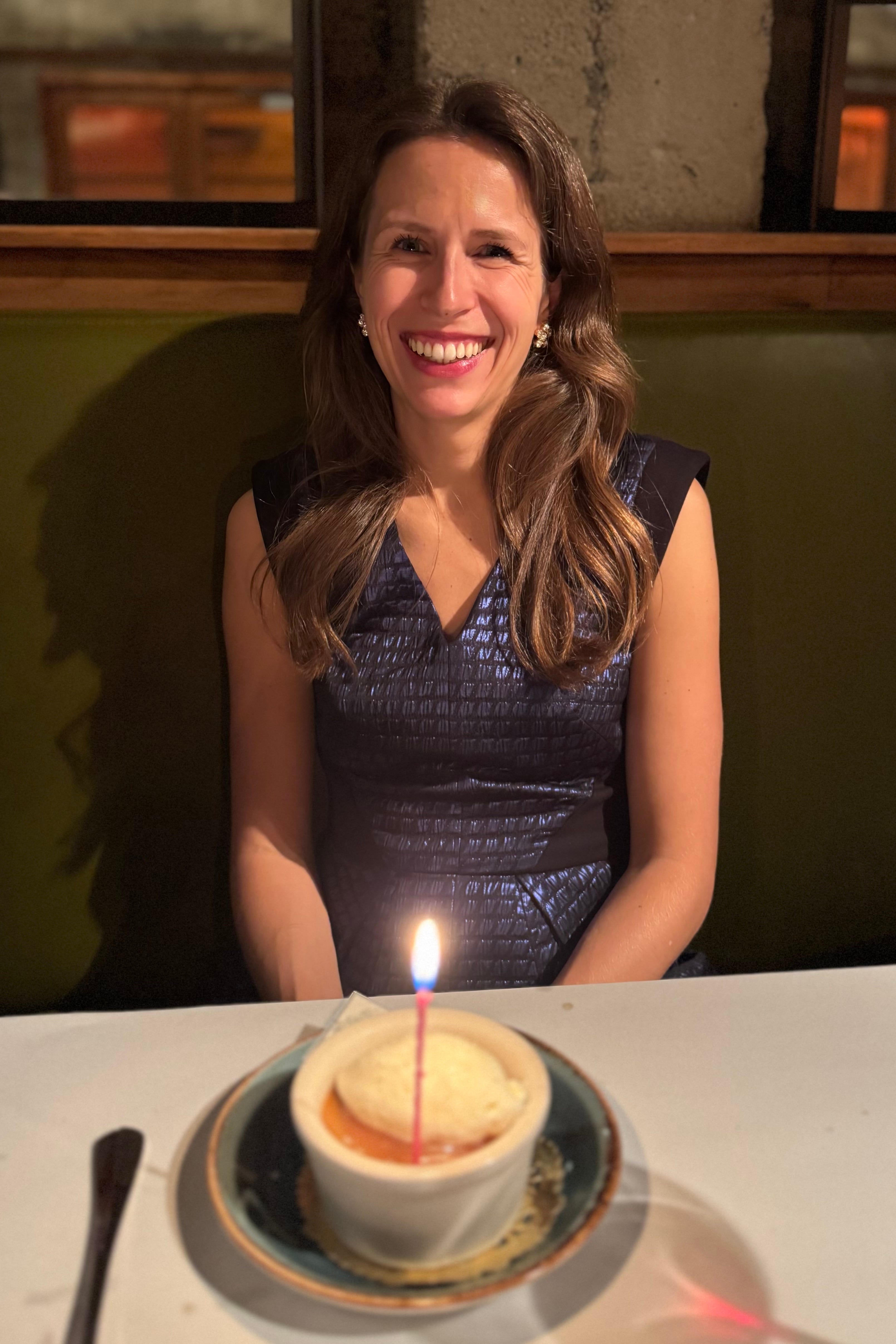
I’m grateful for how far those survival skills got me. They helped me find belonging when I needed it. They built a version of success that worked for a while.
But now, I want a color of my own.
I want to live a little louder. Show up a little messier. Not to be seen for the sake of being seen, but because I’m done disappearing.
If I had to name the energy I want to bring into this next year, it’s this: flamingo energy.
Flamingos don’t blend in. They can’t. They’re bold, visible, unapologetic.
But what I love most is that they’re not born that way. Flamingos are born gray. They become pink over time, through what they consume, how they live, and what nourishes them.
A lot of people talk about getting your pink back after motherhood. But for me, it’s less about getting it back and more about earning it from the inside out.
That’s what I want for this coming year. To say what’s true for me, to choose being myself over being liked, and to trust that the color will come.
Namaste,
Tamara
PS: Fellow 3’s, I see you. What’s one truth you’ve been afraid to speak?
I hear you! I, too, am a 3. I often forget about tools like the Enneagram, and how I can learn so much about myself AND how to grow. Curious to learn more about about your coaching program. Can you share?