
Why does celebrating Dad feel so complicated?
The Father’s Day dilemma nobody wants to admit

Father’s Day is coming up this weekend. And somewhere, a mother is standing in the card aisle having a thought she’d rather not admit out loud:
Does he actually deserve to be celebrated?
She knows he’s a good father, he loves his kids.
She’s just exhausted from managing the entire operating system of the family in her head while juggling a demanding career, keeping small humans alive, and trying to remember whether anyone RSVP’d to the birthday party next weekend.
And now she’s supposed to buy a card celebrating him while so much of what she does still goes unseen.
If you’ve ever had some version of this thought, you’re not alone.
I’m speaking here about a common dynamic in heterosexual dual-career households, but the larger challenge of how we recognize and share the work of family life shows up in all kinds of families.
So let’s talk about the Father’s Day conversation we’re usually too polite to have.
Because I don’t think the tension is actually about Father’s Day. I think it’s about how much harder family life has become for everyone.
Every mom knows the joke about “Ned”. He empties the dishwasher or takes the kids to soccer or remembers one dentist appointment…and suddenly it’s time for the parade.
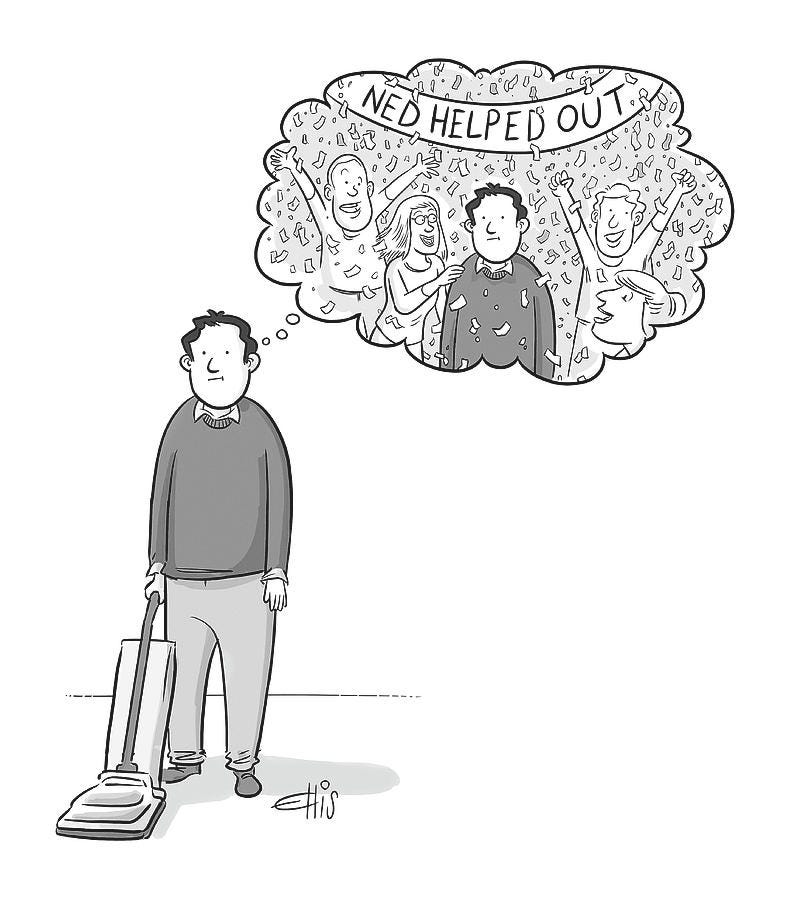
Look at Ned being so helpful.
The joke lands because many women recognize their partners in Ned: a man who expects praise for things they do every day without anyone noticing.
But here’s the uncomfortable part: modern dads really are doing more.
Compared to previous generations, fathers are spending dramatically more time with their children; millennial dads do roughly 4 times as much childcare as Boomer dads did.
In many families, they’re taking on a level of involvement their own fathers never came close to.
And that matters because most dads aren’t measuring themselves against some idealized vision of a perfectly equal partnership. They’re measuring themselves against their own fathers.
From their perspective, the progress is enormous. And honestly, they’re not wrong.
The part we talk about less is how much mothers have changed.
Over the past few decades, mothers’ roles have changed dramatically.
Today, most mothers work for pay outside the home. Many contribute a substantial share of household income. Increasingly, they’re the primary breadwinner.
Yet the expectations of motherhood haven’t shrunk to accommodate that shift.
So today’s mothers aren’t simply doing what their mothers did. They’re doing that plus a career.
At the same time, many of us are still trying to be exceptional at everything:
Be a great leader. Be a present mother. Be a supportive partner. Keep the household running. Stay healthy. Maintain friendships. Volunteer at preschool. And somehow do it all with a smile.
Sound familiar?
So now dads are doing more at home. Moms are doing more at work.
Which raises an obvious question: Why does it still feel like everyone is drowning?
We tend to assume the same amount of work is simply being divided differently.
But parenting itself has changed.
Parents spend significantly more time with their children than previous generations.
We know more about child development. We put our kids in more activities. We spend more time researching, planning, driving, coordinating, helping with homework, scheduling appointments, and worrying about whether we’re doing enough.
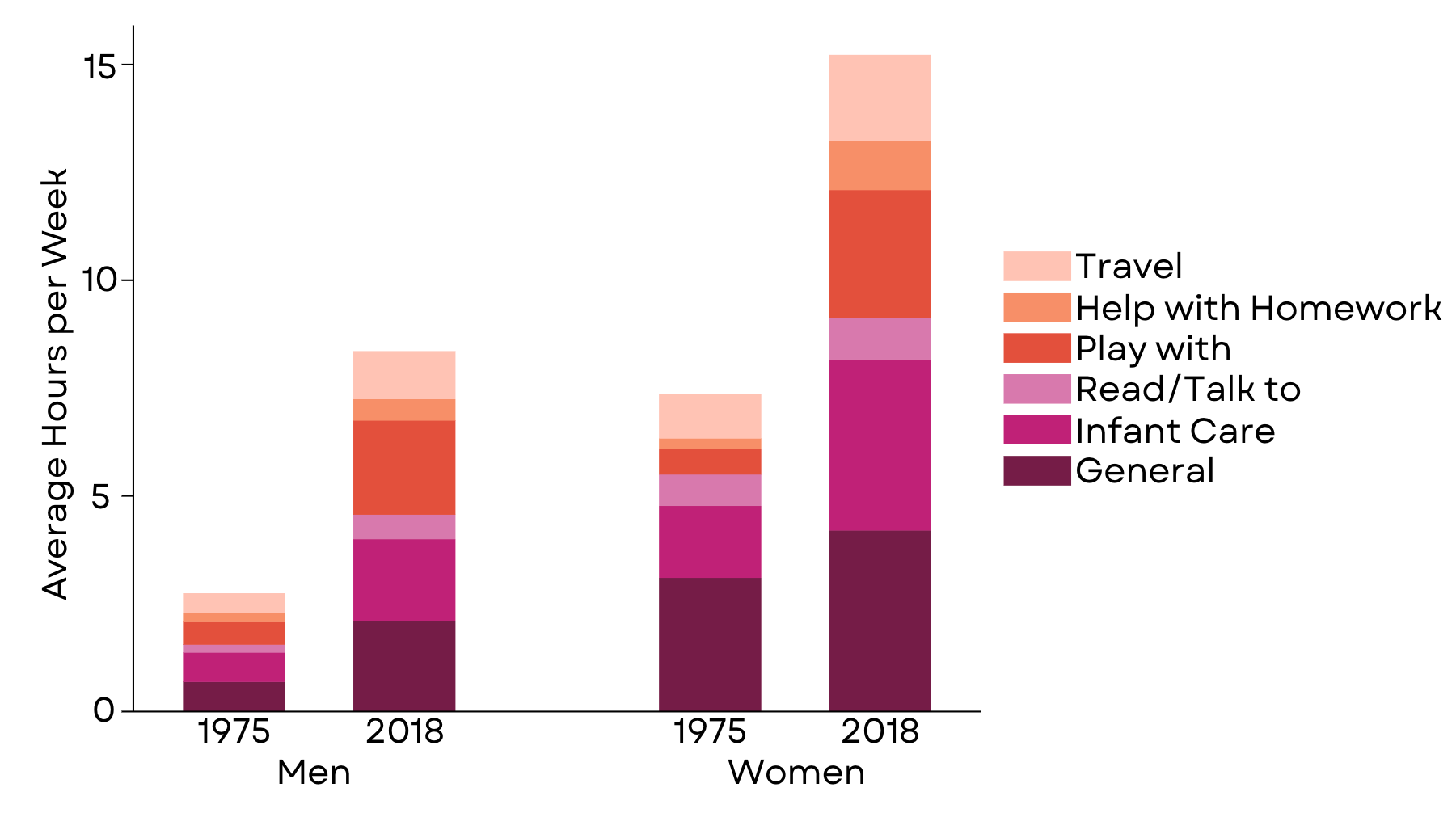
Even as expectations have risen for everyone, mothers still tend to carry more of the highest-stress responsibilities: the sick-day coverage, the doctor’s appointments, the school communication, the emotional labor, the endless mental tabs that stay open in the background.
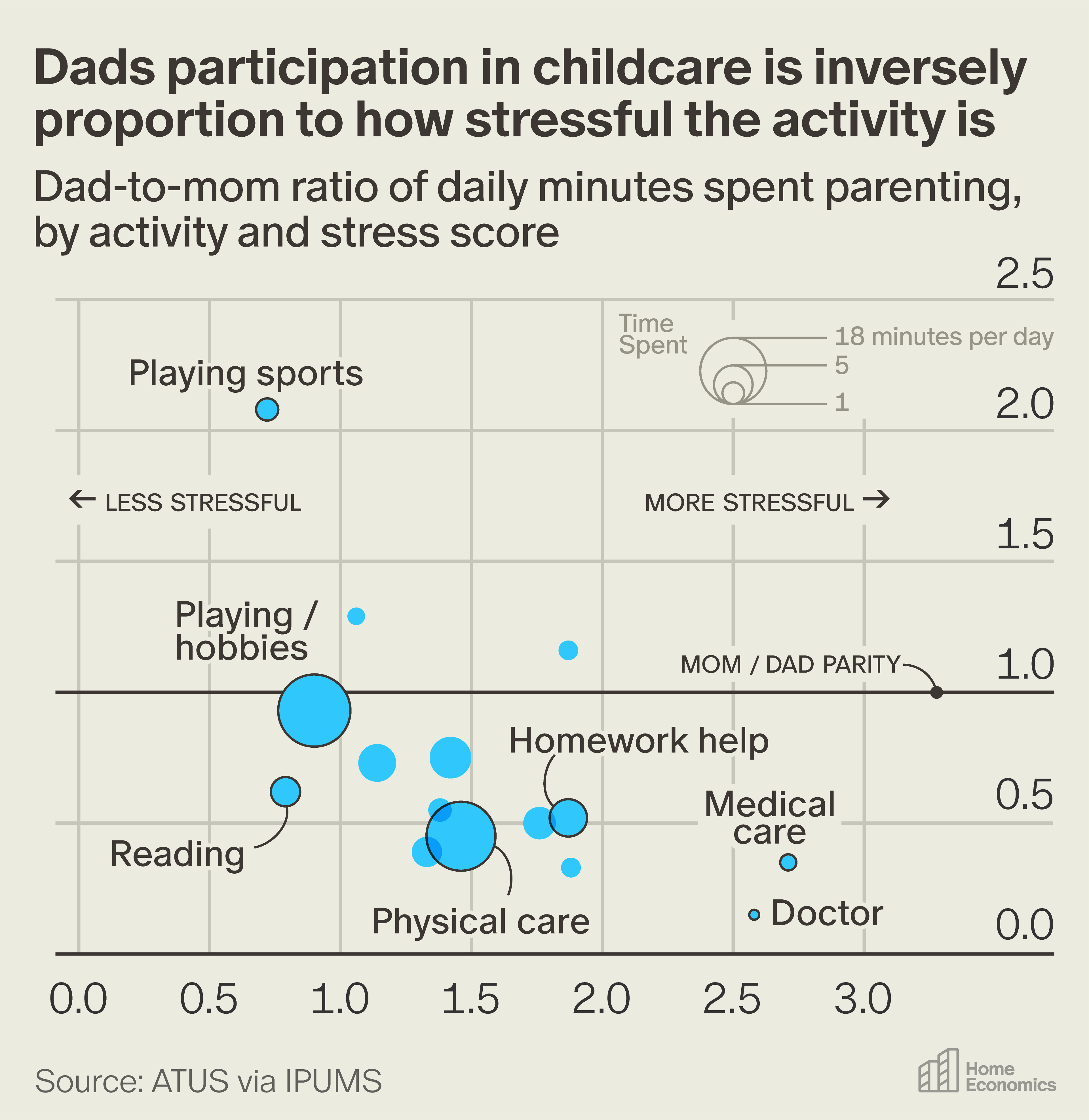
And this is the part I think many couples miss.
Dad’s contribution increased. Mom’s workload didn’t decrease. The total amount of work exploded.
So a dad can legitimately be doing twice what his father did, and a mom can still feel completely overwhelmed.
Those aren’t contradictory realities. They’re happening at the same time.
This is the paradox hiding underneath Father’s Day.
Dad is looking backward. He’s saying: “Look how far I’ve come.”
Mom is looking around. She’s saying: “Look how much still needs to get done before bedtime.”
Neither person is wrong; they’re just measuring different things.
He’s measuring progress. She’s measuring load.
And when people are using different scoreboards, they end up talking past each other.
That’s what makes Father’s Day feel complicated. It’s a holiday designed to celebrate Dad’s contribution in a culture where much of what mothers do remains invisible.
No wonder so many women feel conflicted about it.
You can genuinely appreciate how much your partner contributes and still feel overwhelmed by how much remains. Both can be true.
So if you’re feeling conflicted this Father’s Day, I don’t think it’s really about the card.
It’s about the tension underneath it.
The feeling that everyone is working hard, nobody has enough time, and one or both people don’t feel fully seen for everything they’re contributing.
Resentment rarely comes from a lack of effort. It comes from effort that goes unrecognized.
The planning, the remembering, the coordinating, the emotional labor. The thousands of tiny responsibilities that keep a family functioning but rarely get acknowledged.
So buy the card. Celebrate Dad.
Then a few days later, have the harder conversation.
What does it actually take to run this family? Who owns what? And what would make this feel more sustainable for both of us?
The card is the easy part.
Namaste,
Tamara
PS - What’s the most “Ned” moment you’ve witnessed in your own family?
One thing I am surprised about is how much household work has increased. I thought it actually stayed same or decreased with automation and more packaged availability of food, us hosting less family events at home. I thought the overwhelm is mostly because of double careers. But I can also see: kids are in many more activities which needs mental space and lack of community : neighbours / family naturally helping each other, free play, etc puts more of childcare on parents only
Great article and I completely relate. I think the expectations have grown while the community has decreased. And it turns out the community is what takes the load off of both parents.
To some peoples’ comments about kids running free at 7 or 8. We as a society have lost that which makes it harder on parents all around. Or if a parent decides to let their kid roam, they wonder about judgement or if their kid is safe because other 7-8 year olds aren’t running around.